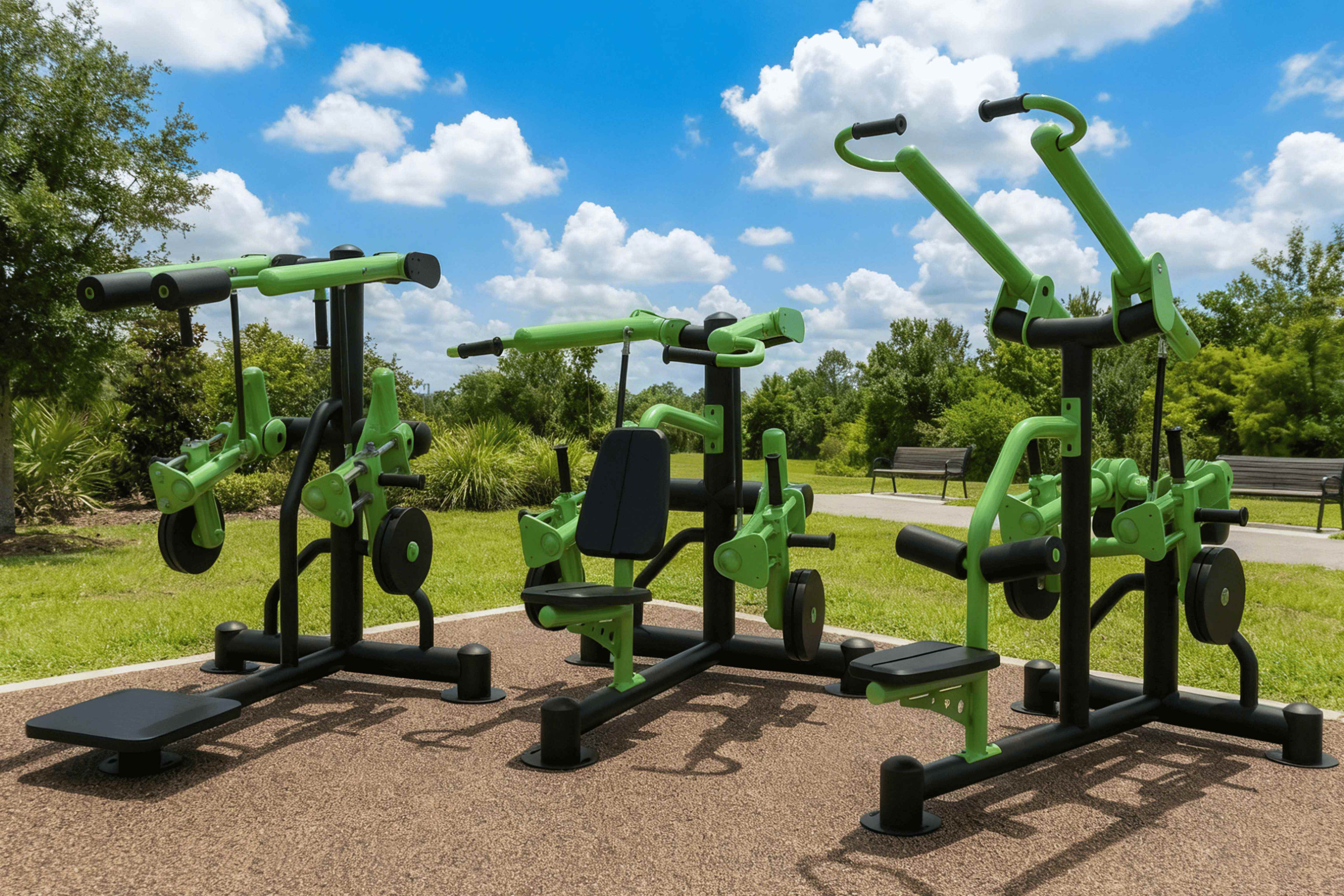
Introduction: The Outdoor Fitness Revolution
In recent years, outdoor fitness equipment has transformed from a novelty into a cornerstone of community health initiatives worldwide. Parks, residential complexes, schools, and public spaces are increasingly incorporating professional-grade outdoor gym equipment to promote active lifestyles and community wellness.
This comprehensive guide explores everything you need to know about outdoor fitness equipment—from understanding its benefits to selecting the right supplier for your project.
Why Outdoor Fitness Equipment Matters
Community Health Benefits
Outdoor fitness equipment provides accessible, free exercise opportunities for people of all ages and fitness levels. Unlike traditional gyms that require memberships and monthly fees, outdoor fitness parks are open to everyone, breaking down economic barriers to physical activity.
Key Health Benefits:
- Cardiovascular Health: Regular use of outdoor fitness equipment improves heart health and circulation
- Strength Building: Resistance-based equipment develops muscular strength and endurance
- Flexibility & Mobility: Stretching stations and dynamic equipment enhance range of motion
- Mental Wellness: Outdoor exercise combines physical activity with fresh air and nature exposure, reducing stress and improving mood
- Social Connection: Community fitness spaces encourage social interaction and group exercise
Economic and Social Impact
Installing outdoor fitness equipment delivers measurable returns for communities:
- Increased Property Values: Properties near well-maintained fitness parks often see value appreciation
- Reduced Healthcare Costs: Active communities experience lower rates of obesity, diabetes, and cardiovascular disease
- Enhanced Community Pride: Quality public amenities foster civic engagement and neighborhood identity
- Multigenerational Spaces: Equipment suitable for various age groups creates inclusive community gathering points
- Tourism & Recreation: Attractive outdoor fitness facilities can become destination amenities
Types of Outdoor Fitness Equipment
Strength Training Equipment
Chest Press Machines
- Target: Pectorals, deltoids, triceps
- Benefits: Upper body strength development, joint stability
- Ideal For: Adults and seniors seeking upper body conditioning
Pull-Up Bars & Dip Stations
- Target: Back, shoulders, arms, core
- Benefits: Bodyweight strength training, functional fitness
- Ideal For: All fitness levels with various height options
Leg Press & Squat Stations
- Target: Quadriceps, hamstrings, glutes
- Benefits: Lower body power, balance improvement
- Ideal For: Rehabilitation and athletic training
Cardiovascular Equipment
Elliptical Trainers
- Low-impact cardio workout
- Suitable for joint-sensitive users
- Adjustable resistance levels
Stationary Bikes
- Cardiovascular endurance building
- Leg strength development
- Weather-resistant design
Rowing Machines
- Full-body cardiovascular workout
- Core strengthening
- Low-impact exercise option
Flexibility & Balance Equipment
Stretching Stations
- Guided flexibility exercises
- Injury prevention
- Post-workout recovery
Balance Beams & Platforms
- Proprioception training
- Fall prevention for seniors
- Core stability development
Installation Best Practices
Site Selection & Planning
Location Considerations:
- Accessibility: Easy access from parking areas and pathways
- Visibility: Well-lit, visible locations enhance safety and usage
- Shade & Shelter: Consider natural shade or install shade structures
- Drainage: Proper water drainage prevents equipment damage and safety hazards
- Safety Zones: Maintain 2-meter clearance around each equipment piece
Foundation Requirements
Professional installation ensures safety and longevity:
Concrete Specifications:
- Minimum strength: C25/30 grade concrete
- Depth: 600-800mm depending on equipment weight
- Curing time: 28 days before equipment installation
- Anchor bolts: Marine-grade stainless steel, embedded during concrete pour
Surface Options:
- Rubber Safety Surfacing: Impact-absorbing, ADA-compliant
- Artificial Turf: Natural appearance, good drainage
- Poured-in-Place Rubber: Seamless, customizable colors
- Engineered Wood Fiber: Cost-effective, natural look
Safety Standards Compliance
Ensure all equipment meets international safety standards:
- EN 16630:2015: European standard for outdoor fitness equipment
- ASTM F3101: American standard for outdoor fitness equipment
- ISO 9001:2015: Quality management certification
- CE Marking: European conformity certification
Maintenance Guidelines
Regular Inspection Schedule
Weekly Checks:
- Visual inspection for damage or vandalism
- Check for loose bolts or fasteners
- Remove debris and litter
- Test moving parts for smooth operation
Monthly Maintenance:
- Lubricate moving parts with appropriate lubricants
- Inspect surface coatings for chips or rust
- Check foundation stability
- Clean equipment surfaces
Annual Professional Inspection:
- Comprehensive safety audit
- Structural integrity assessment
- Replacement of worn components
- Documentation for liability protection
Weather Protection
Corrosion Prevention:
- Multi-stage surface treatment (degreasing, shot blasting, galvanizing, powder coating)
- Regular inspection of coating integrity
- Immediate repair of damaged finishes
- Use of marine-grade stainless steel hardware
Seasonal Considerations:
- Winter: Remove snow accumulation, check for ice damage
- Summer: Inspect for UV degradation, ensure shade structures are secure
- Rainy Season: Verify drainage systems, check for water pooling
Choosing the Right Equipment Supplier
Key Selection Criteria
1. Manufacturing Experience
Look for suppliers with:
- 10+ years in outdoor fitness equipment production
- Proven track record with municipal and commercial projects
- Portfolio of successful installations
- Client testimonials and case studies
2. Quality Certifications
Verify the supplier holds:
- ISO 9001:2015 (Quality Management)
- ISO 14001:2015 (Environmental Management)
- Product-specific safety certifications (EN 16630, ASTM F3101)
- Third-party testing reports (SGS, TÜV)
3. Material Quality
Premium suppliers use:
- Heavy-duty welded steel (minimum 2.5mm wall thickness)
- Hot-dip galvanizing for corrosion protection
- UV-resistant powder coating (80-100 microns)
- Marine-grade stainless steel fasteners
- High-density polyethylene (HDPE) for seats and panels
4. Warranty Coverage
Comprehensive warranties should include:
- Main frame: 10+ years structural warranty
- Moving parts: 3-5 years
- Surface finish: 5+ years against peeling/fading
- Hardware: 2+ years
5. Customization Options
Quality suppliers offer:
- Custom color schemes (RAL color matching)
- Logo integration and branding
- Equipment configuration flexibility
- Design consultation services
6. After-Sales Support
Essential support services:
- Technical installation guidance
- Spare parts availability (10+ years)
- Maintenance training
- Responsive customer service
Questions to Ask Potential Suppliers
- How long have you been manufacturing outdoor fitness equipment?
- Can you provide references from similar projects?
- What certifications do your products hold?
- What is your typical lead time and delivery process?
- Do you offer installation services or guidance?
- What warranty do you provide on different components?
- How do you handle warranty claims and spare parts?
- Can you customize equipment to our specifications?
- What is your minimum order quantity (MOQ)?
- Do you provide 3D design renderings before production?
Cost Considerations and ROI
Initial Investment
Outdoor fitness equipment costs vary based on:
- Equipment Type: Simple pull-up bars ($500-1,500) vs. complex multi-stations ($5,000-15,000)
- Quantity: Bulk orders typically receive volume discounts
- Customization: Custom colors and branding add 10-20% to base cost
- Installation: Professional installation adds 15-30% to equipment cost
- Surfacing: Safety surfacing ranges from $15-50 per square foot
Long-Term Value
Operating Costs:
- Minimal ongoing expenses compared to indoor facilities
- No electricity or climate control costs
- Low maintenance requirements (annual inspection and minor repairs)
- No staffing requirements
Return on Investment:
- Increased property values and community appeal
- Reduced healthcare costs through preventive wellness
- Enhanced quality of life metrics
- Positive community reputation and civic pride
Case Study: Successful Implementation
Community Park Transformation
Project: Municipal park fitness installation
Location: Residential community (5,000 residents)
Investment: $45,000 (12 equipment pieces + surfacing + installation)
Results After 12 Months:
- 300+ weekly users across all age groups
- 40% increase in park visitation
- Positive feedback from 85% of surveyed residents
- Measurable increase in community physical activity levels
- Zero maintenance issues or safety incidents
Key Success Factors:
- Community input during planning phase
- Strategic equipment selection for diverse users
- Professional installation and safety surfacing
- Regular maintenance schedule
- Community promotion and fitness programs
Conclusion: Building Healthier Communities
Outdoor fitness equipment represents a powerful investment in community health, social connection, and quality of life. By understanding equipment types, following installation best practices, implementing proper maintenance, and selecting the right supplier, you can create outdoor fitness spaces that serve your community for decades.
Whether you're a municipal planner, property developer, school administrator, or community organizer, outdoor fitness equipment offers an accessible, sustainable solution for promoting active lifestyles and building stronger, healthier communities.
Next Steps
Ready to start your outdoor fitness equipment project?
- Assess Your Needs: Determine your target users, available space, and budget
- Research Suppliers: Request quotes from 3-5 certified manufacturers
- Review Proposals: Compare quality, warranties, and total cost of ownership
- Plan Installation: Work with professionals for site preparation and installation
- Launch & Promote: Create awareness and encourage community use
For expert guidance on selecting outdoor fitness equipment for your community, contact experienced manufacturers who can provide customized solutions, quality certifications, and comprehensive support throughout your project.